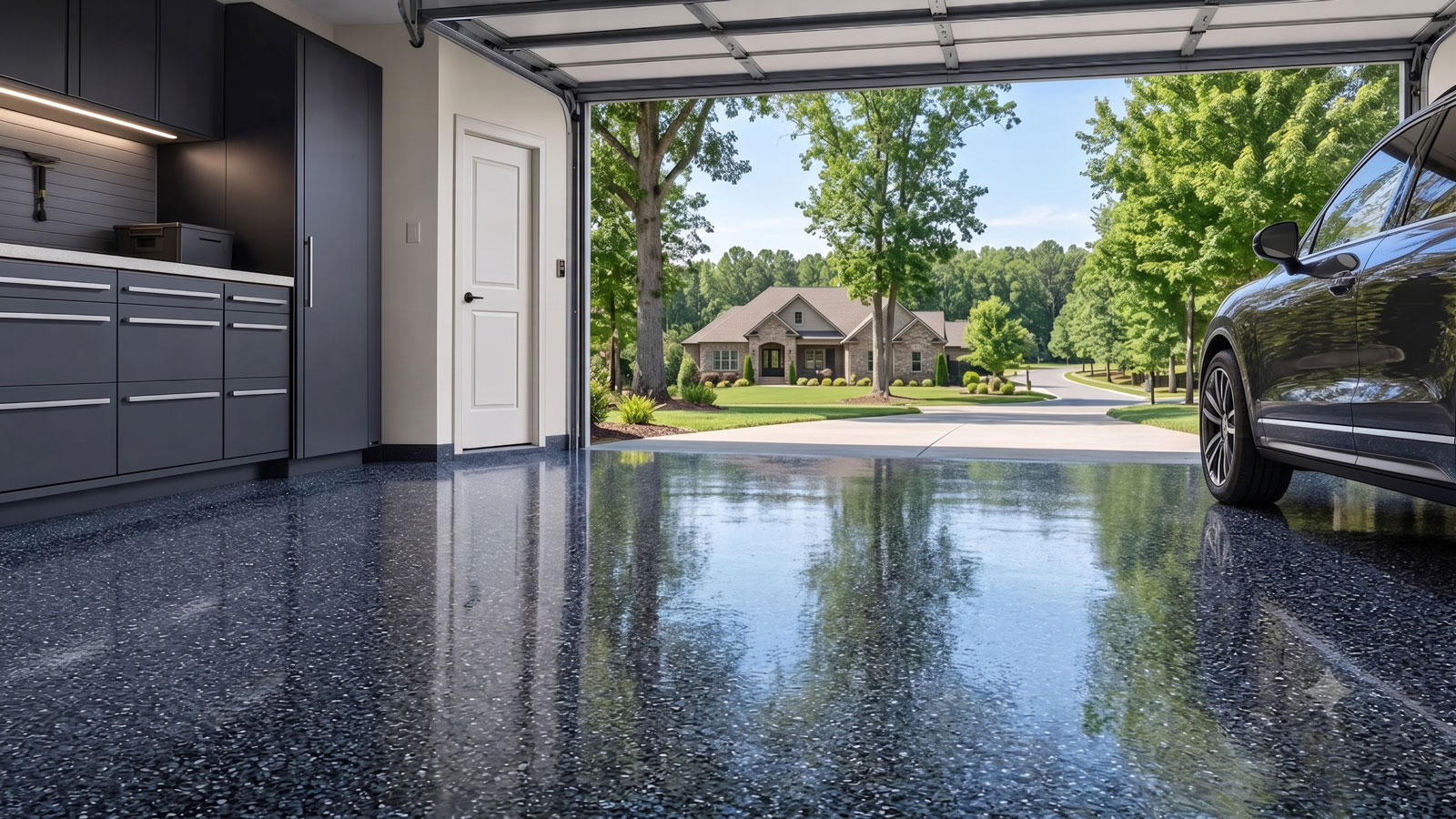
Garage Floor Coating in Murfreesboro, TN
Floor Coating Services in Murfreesboro, TN
Murfreesboro was founded in 1811 and has experienced extraordinary modern growth. Population rose from 44,922 in 1990 to 68,816 in 2000 and has since expanded well beyond 150,000, creating a mix of old central neighborhoods, postwar housing, and enormous newer subdivision areas. That enormous growth range means the age of the house does not always match the garage slab. Older central properties can have later additions or repours, while newer subdivisions may have young concrete that still carries curing compounds, sealers and builder patches.
Murfreesboro lies in the 556-square-mile Stones River watershed, where major flooding sources include the West Fork Stones River, Lytle Creek, and sinkholes. The city documents repeated historic floods, and karst sinkholes can store stormwater when heavy rain exceeds their capacity. Stones River, Lytle Creek and sinkhole drainage make water behavior unusually local. Map context is useful, but driveway grade, threshold water, slow-drying areas and prior coating failure remain the practical evidence at a garage.
Older central garages may have paint, repairs, additions, or long vehicle-use history, while newer growth areas are dominated by young attached slabs with builder sealers, control joints, smooth finishes, and modern detention systems.
Local Market Insight
Murfreesboro's explosive growth created an unusually wide range of garage ages, from older in-town slabs to very recent subdivision concrete. Stones River, Lytle Creek, and sinkhole-related drainage make water behavior especially property-specific in this market.
What Affects the Cost of Garage Floor Coating in Murfreesboro?
Murfreesboro's older core and massive newer growth areas create a wide range of preparation needs. Established floors may have coatings, repairs or mixed pours; newer slabs may need builder treatments mechanically removed. Stones River and sinkhole drainage, subdivision grading, winter residue and garage layout can further affect scope.
Development-era slab history
Murfreesboro was founded in 1811 and has experienced extraordinary modern growth. Population rose from 44,922 in 1990 to 68,816 in 2000 and has since expanded well beyond 150,000, creating a mix of old central neighborhoods, postwar housing, and enormous newer subdivision areas. The likely preparation changes between older, remodeled, rural-edge, and recent subdivision concrete.
Local drainage and water history
Murfreesboro lies in the 556-square-mile Stones River watershed, where major flooding sources include the West Fork Stones River, Lytle Creek, and sinkholes. The city documents repeated historic floods, and karst sinkholes can store stormwater when heavy rain exceeds their capacity. Actual threshold water and property grading matter more than broad watershed proximity by itself.
Paint, sealers, and contamination
Older paint, DIY coatings, oil staining, adhesive, clear sealers, curing compounds, and builder residue can all interfere with reliable adhesion and may require different removal work.
Cracks, patches, and multiple pours
Stable cracks, control joints, utility cuts, repours, chipped edges, and old patch material should be evaluated before full-surface preparation so repairs match the slab.
Humidity, rain, and garage use
Heavy rain and warm-season storms can raise runoff quickly, while growing subdivisions add large driveways and roofs that make local grading important.
Layout, storage, and cure schedule
Multi-bay floors, detached shops, steps, stem walls, cabinets, stored equipment, traction preference, and how quickly vehicles must return can all affect labor and material choice.
Call for a clear, project-specific estimate — or request one online.
Murfreesboro's rapid growth created an enormous range of garage ages
The city's population has multiplied several times over since 1990. That growth means a coating project near the historic center can begin with a completely different slab history from one in a recently built subdivision a few miles away.
For coating work, development history is useful only when it leads back to the slab. A garage can be added, widened, repoured, converted to workshop use, or resurfaced years after the house was built; newer concrete can also carry invisible treatments that need removal.
A useful estimate should identify concrete transitions, coatings, contamination, patch compounds, and construction treatments before pricing the decorative finish. Those details make the project specific to the property instead of to a ZIP code.
Stones River, Lytle Creek, and sinkhole flooding make drainage unusually specific
Murfreesboro's floodplain guidance identifies both waterways and karst depressions as meaningful flood sources. A garage inspection should therefore consider surface runoff, low ground, and any sinkhole-related ponding history instead of focusing only on river proximity.
The homeowner should report known flood or high-water history, threshold marks, apron ponding, downspouts that discharge near the slab, persistent dampness, efflorescence, or repeated coating failure. Those observations are much more actionable than a general statement that the area is rainy or humid.
A coating can improve cleanup after normal wet traffic, but it cannot redirect active runoff. If the garage remains dry, the project can stay focused on mechanical preparation, repairs, finish, traction, and return-to-service timing. Murfreesboro homeowners should keep watershed and sinkhole context separate from the physical preparation of the concrete. A dry garage can still have difficult old coatings or repairs, while a newer clean-looking slab can require substantial profiling and may still have a lot-specific runoff issue. A useful Murfreesboro estimate should also distinguish sinkhole or watershed context from ordinary surface preparation. Old coatings, repairs, builder treatments and garage geometry can drive labor on a completely dry slab, while active water entry should be handled as a separate site problem.
Before coating a Murfreesboro garage
- Does the slab appear original, later-added, expanded, repoured, or made from multiple concrete placements?
- Is paint, DIY epoxy, clear sealer, curing compound, adhesive, oil staining, or other contamination present?
- Are cracks, patches, pitting, chipped edges, control joints, or utility cuts visible?
- Does the driveway, ditch, swale, retaining wall, or surrounding grade send water toward the garage?
- Are there threshold water marks, mineral deposits, persistent damp areas, or previous coating failures?
- Does the garage see workshop, lawn-equipment, recreational, storage, or unusually heavy vehicle use?
- How quickly must vehicles and stored items return after the installation?
Murfreesboro Garage Floor Coating FAQs
How can older Murfreesboro garages differ from newer subdivision floors?
Older garages may have paint, contamination, repairs, additions, or repours. Newer slabs are more likely to have curing compounds, sealers, smooth finishes, control joints, and builder patching.
Why are sinkholes and karst drainage relevant in Murfreesboro?
They are part of the local drainage context and can affect how water moves across some properties. The garage should still be evaluated by actual grading, ponding, threshold water, and slab condition.
Does being near the Stones River or Lytle Creek automatically mean moisture treatment is needed?
No. Waterway proximity alone does not diagnose slab moisture. Actual water entry, persistent dampness, mineral deposits, or prior coating failure should guide the decision.
What can make a newer Murfreesboro garage more complex than it looks?
Large multi-bay layouts, joints, builder patches, dense finishes, storage areas, and cure-time requirements can all add preparation and installation work.
Why are sinkholes relevant to some Murfreesboro garage-floor projects?
Karst sinkholes can affect how stormwater is stored and routed during heavy rain, but they do not automatically mean a garage has slab moisture. The project should still be based on actual drainage, threshold water and slab evidence at the property.
Murfreesboro Neighborhoods & Local Context
Phone Quote Line
Speak with a floor coating specialist about your project and get a realistic estimate range.
(629) 265-0505Typical Project Cost
$3,000–$5,500
Typical range for a two-car garage. Final pricing depends on floor size, concrete condition, prep work, coating type, and finish options.
Helpful Guides